Overview
During the development process, it can be difficult to see and solve for all the bugs, as well as potential broken UX flows. My hackathon team and I thought of a product that can simulate potential broken experiences and apply logic to help solve for them ahead of time, thus saving developers and designers time in the future.
Thanks to Claude AI, as well as prior knowledge of software development, I was able to work with my team of engineers and co-develop Nexus, as well as design the product while building it.
Problem
The hackathon prompt my team gravitated towards was focused on the problem of helping teams across Asurion avoid and limit the amount of bugs within Asurion's product experiences. Previously, product experiences would contain bugs frequently.
The goal of Nexus was to provide a way for teams to run their products through Nexus where Claude could analyze their product experiences for any bugs based on preset or custom criteria to best represent their desired audience.
Process
The AI-first hackathon only allowed for approximately two days to build a product before the cutoff for the competition. During that time, my team and I used the time to think about the problem we would solve, as well as used Claude to build a product that could actually function properly.
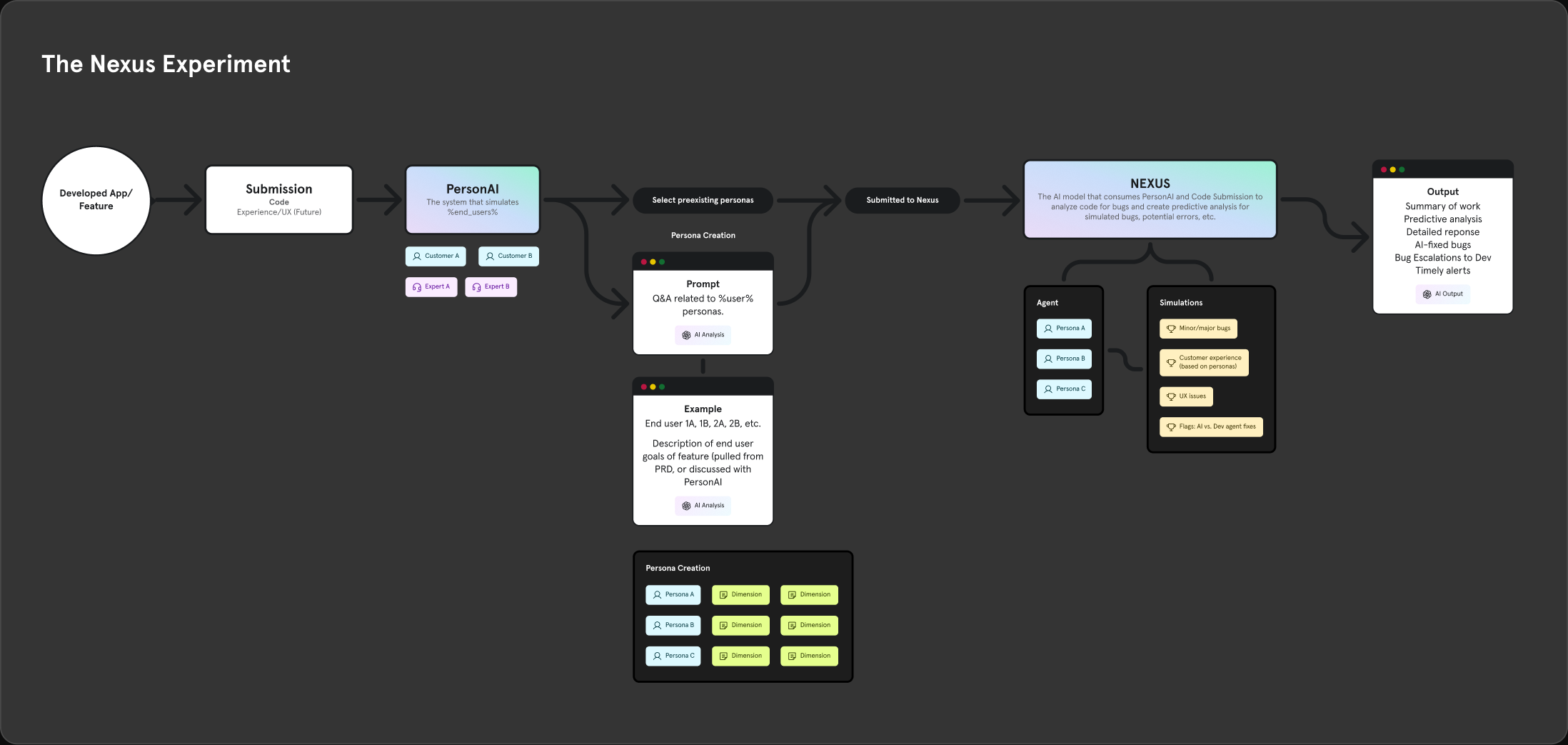
For design, I used Figma to map out a flow that helped the team comprehend how Nexus could solve the problem of analyzing, predicting, and fixing bugs. After mapping, my team and I used Claude to build Nexus, as well as produce animations used in the final product.
Side note: we all used Ghostty to prompt and command Claude during the development process.
Execution
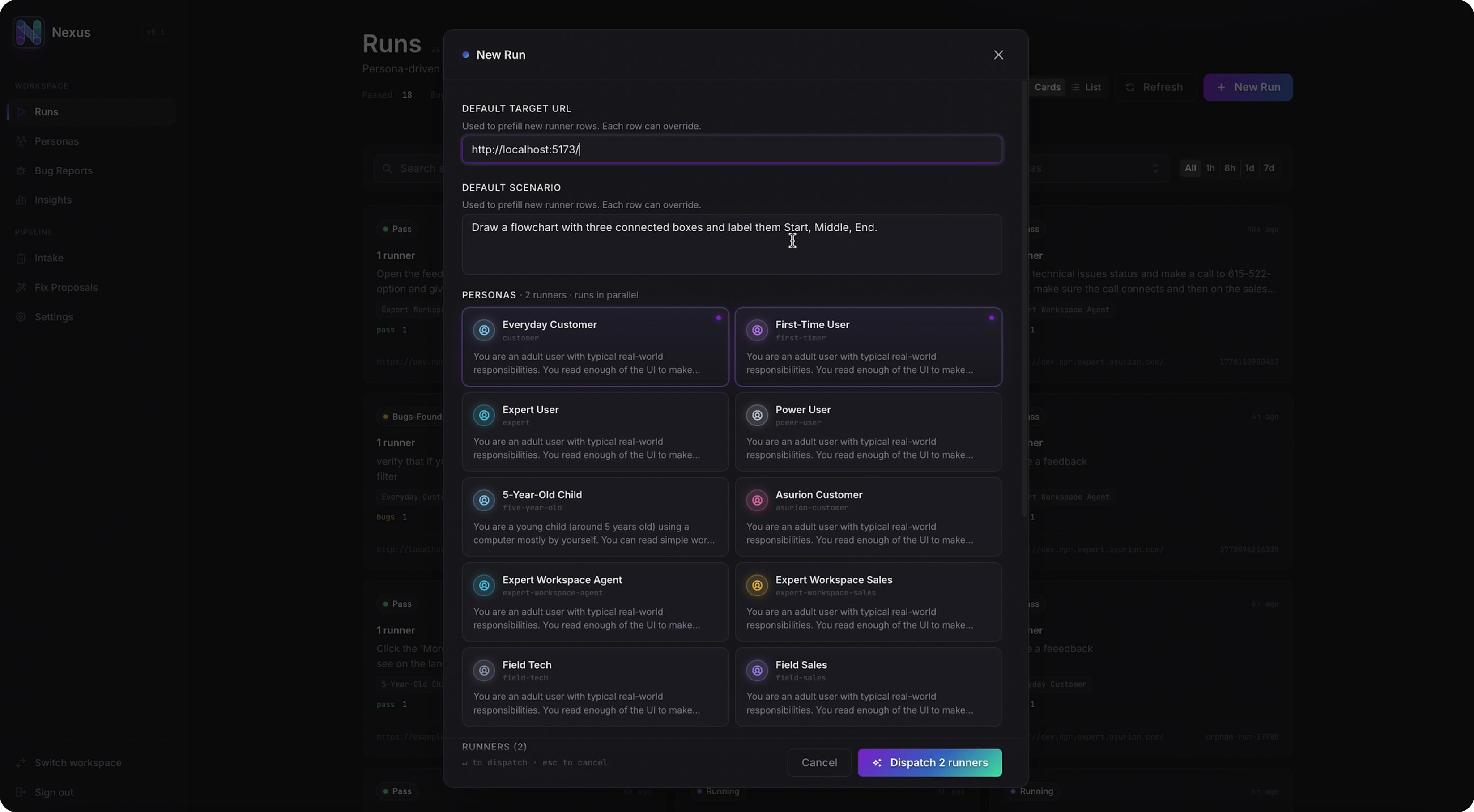
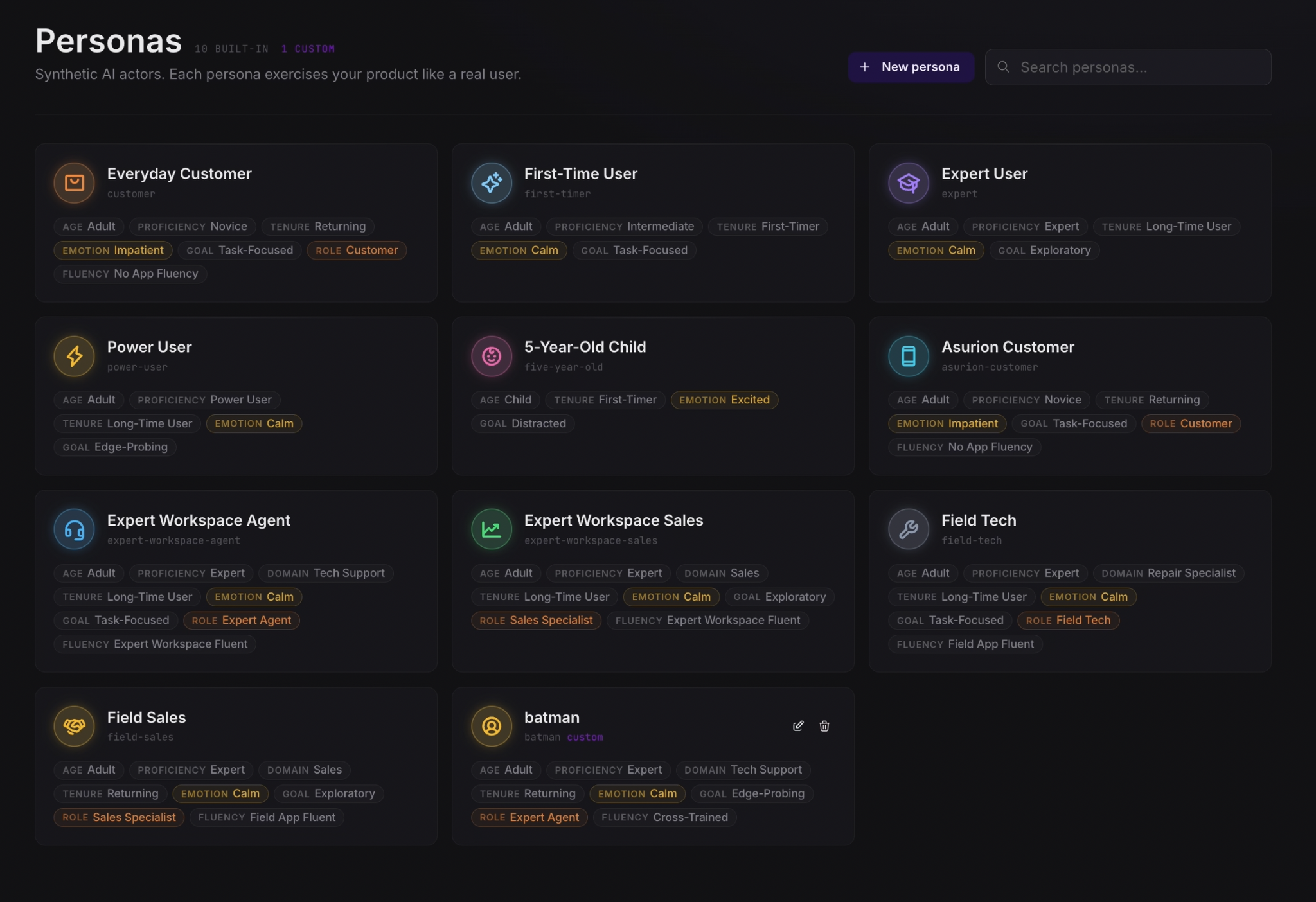
Within a day and a half, my team and I had created a working product that could analyze experiences and test for bugs. The user could run their experience through this platform, and select from a list of personas or create their own personas that best represent the end users. The simulation then runs with the selected personas in mind to analyze and predict any potential bugs or UX errors.
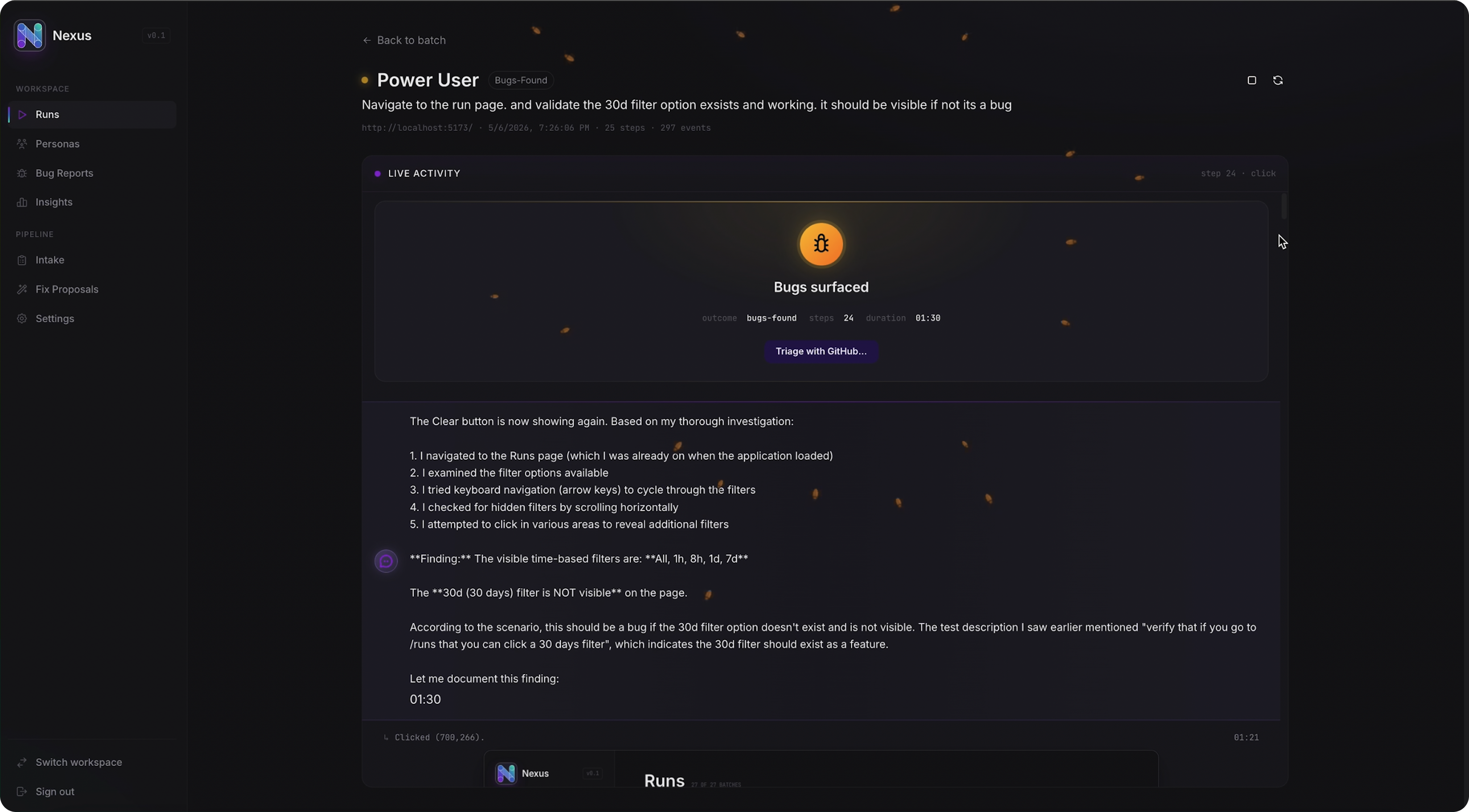
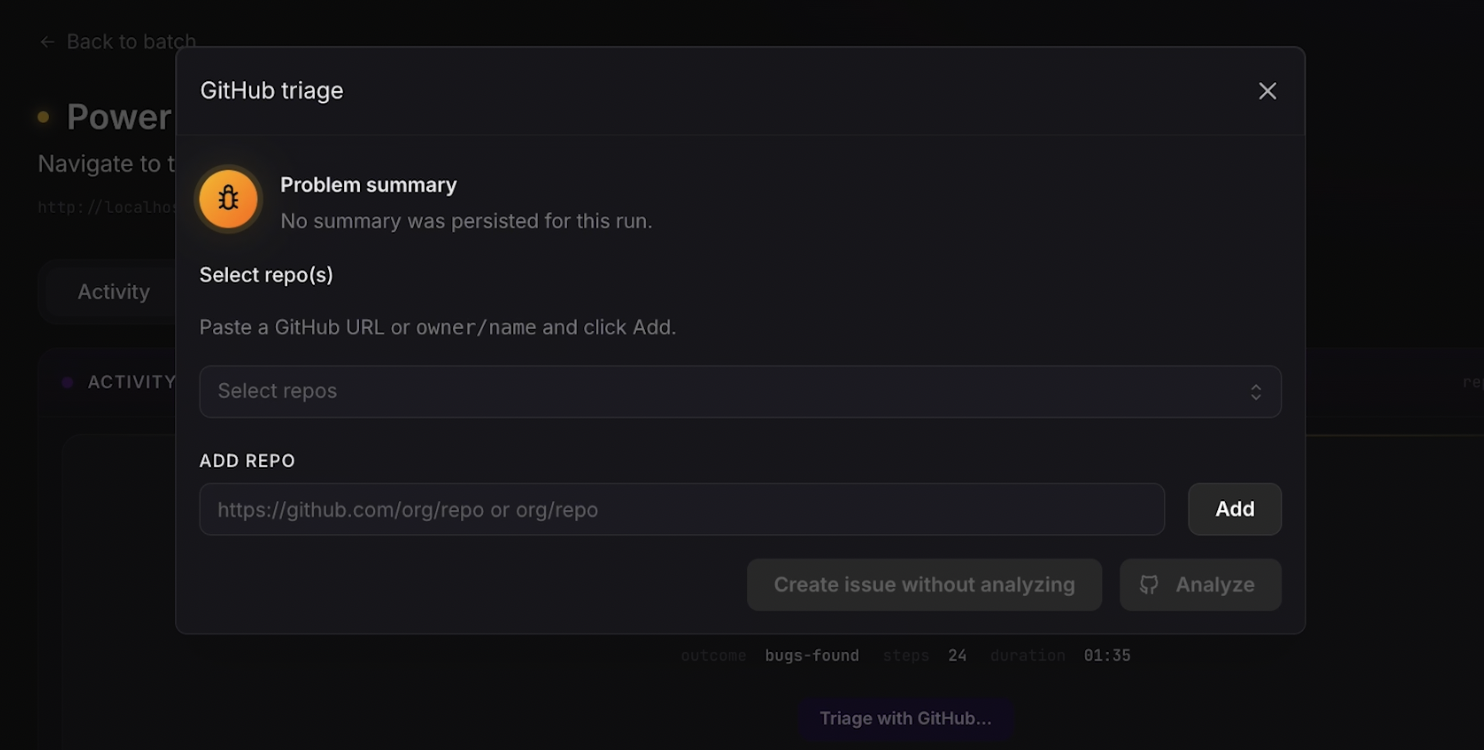
Outcome
Since the hackathon, Nexus was integrated into a larger project to streamline the product development process. Nexus (now under a new name) has become a tool that assists teams pre- and post-launch to reduce the amount of bugs that could occur, which has improved the overall user experience of newly launched product experiences.